No public tool shows a complete phone number history. Combine exact-match searches, reverse lookups, carrier data, spam reports, and real-world signals before trusting or adopting a number.
Know What “Phone Number History” Means
Phone number history covers records associated with a number before it reached you. Call history only lists activity on your device or carrier account.
| History signal | Where it may appear | What it can tell you |
| Names and addresses | Directories and people-search sites | Possible associations, not confirmed ownership |
| Business use | Search results, maps, ads, and old listings | Whether the number was publicly promoted |
| Carrier and line type | Carrier lookup services | Current provider and line type |
| Spam reputation | Caller-ID apps and complaint databases | Whether past calls were flagged |
| Reassignment clues | Wrong-name calls, texts, and account conflicts | Whether the number may have belonged to someone else |
A name may be stale, a carrier can change after porting, and a spam report may describe spoofed calls. Confirm each important result elsewhere.
Run This Phone Number History Check
1. Search Every Common Number Format
Use quotation marks to search +1XXXXXXXXXX, (XXX) XXX-XXXX, XXX-XXX-XXXX, and ten digits without punctuation.
Repeat the strongest format with “spam,” “scam,” “business,” or a suspected name. Check web results, maps, profiles, classifieds, and directories.
2. Record Each Match Before Opening It
Log the URL, displayed name, date, location, and page type. Save screenshots before reporting a listing.
3. Compare Two Reverse Phone Lookups
Compare two established services for possible names, cities, carriers, line types, and dates. Review subscription terms before paying.
The FTC explains that people-search reports combine public records, public profiles, and broker data. One number may expose substantial personal information.
4. Check Current Carrier and Line Type
A carrier lookup can show the current provider and whether the line is mobile, landline, toll-free, or VoIP. It cannot identify previous users.
5. Check Reputation and Public Listings
Check caller-ID services for labels, complaint dates, and categories. Look for the number on business sites, maps, ads, marketplace posts, and profiles.
6. Ask the Provider Focused Questions
Ask whether the number was recently reassigned, has provisioning problems, or qualifies for replacement. Do not expect disclosure of a previous subscriber’s identity.
Score the Evidence, Not the Number of Results
One old listing is weaker than several recent, matching signals. Score the evidence before deciding.
| Finding | Risk level | Next action |
| No results and no wrong-party activity | Low, not proof of no history | Use and monitor for two weeks |
| One stale directory or listing | Low to moderate | Request correction and watch for related calls |
| Several old-owner names or account conflicts | Moderate | Document conflicts and contact the provider |
| Recent scam complaints or active business listings | High for public or business use | Request another number or repair its reputation |
| Bank, medical, or verification messages for another person | High privacy risk | Do not interact; notify the sender through an official channel |
Recognize a Recycled Phone Number
The FCC-backed Reassigned Numbers Database says providers must age a permanently disconnected U.S. number for at least 45 days before reassignment.
The database tells callers whether a number was disconnected after a consent date. It does not reveal previous owners or provide a complete history.
Common recycled-number signals include:
- repeated calls or messages asking for the same unknown person;
- account sign-up errors stating that the number is already used;
- password-reset or appointment messages you did not request;
- search results tied to an unrelated person or closed business; and
- spam warnings appearing soon after activation.
Do not open private links or request another person’s codes. Ask the platform to verify current possession and remove the stale association.
Know What a Lookup Cannot Prove
A clean report does not prove a number is new. Private databases, deleted pages, contact lists, and unindexed accounts remain invisible.
A lookup cannot provide another person’s private calls, texts, accounts, or live location. Avoid services promising private records or guaranteed identity data.
Numbers move between carriers and people while brokers retain old associations. Never use lookup data for regulated decisions, harassment, or surveillance.
Clean Up a Number With Unwanted History
- Document the pattern. Save dates, senders, labels, and affected services for seven to fourteen days.
- Correct public listings. Contact each directory, map profile, or website displaying the wrong owner.
- Remove exposed personal data. Use people-search opt-outs and Google’s “Results about you” removal process.
- Resolve account conflicts. Contact the platform; never use codes or recovery links intended for the previous owner.
- Repair business reputation. Register legitimate caller information and request review from the provider showing the warning.
- Escalate or replace. Ask your number provider for another number when high-risk messages or severe reputation problems continue.
Before giving up a number, remove it from banking, email recovery, healthcare, government, marketplace, and messaging accounts. Delete public listings and notify important contacts.
Under the TrueNumber terms, a number may be recycled after four weeks without calls or texts. Keep important numbers active and update accounts before expiration.
FAQs about Phone Number History
Can I find a complete phone number ownership history?
No. Public searches and lookup services provide partial, sometimes outdated associations. Carriers generally do not disclose previous subscriber identities. Confirm important findings with more than one source.
How can I tell if my phone number was recycled?
Look for repeated wrong-name calls, old account conflicts, unrelated public listings, and messages for another person. Your provider may confirm reassignment within its own system but may not know the number’s full cross-carrier history.
Can the previous owner see my calls or messages?
Reassignment alone does not give a former owner access to your device. Risk remains if you leave your number attached to shared cloud accounts, forwarding services, or compromised credentials, so review account security separately.
Can I erase the previous owner’s records?
You can request corrections from websites and directories, but you cannot instantly update every broker, contact list, or private database. Keep proof of current control and repeat important checks after corrections are processed.
Should I reject any previously used number?
No. Reassignment is common, and minor old listings are usually manageable. Consider another number when recent scam reports, persistent sensitive messages, account conflicts, or business reputation problems outweigh the cost of starting over.
Start With a Separate Number
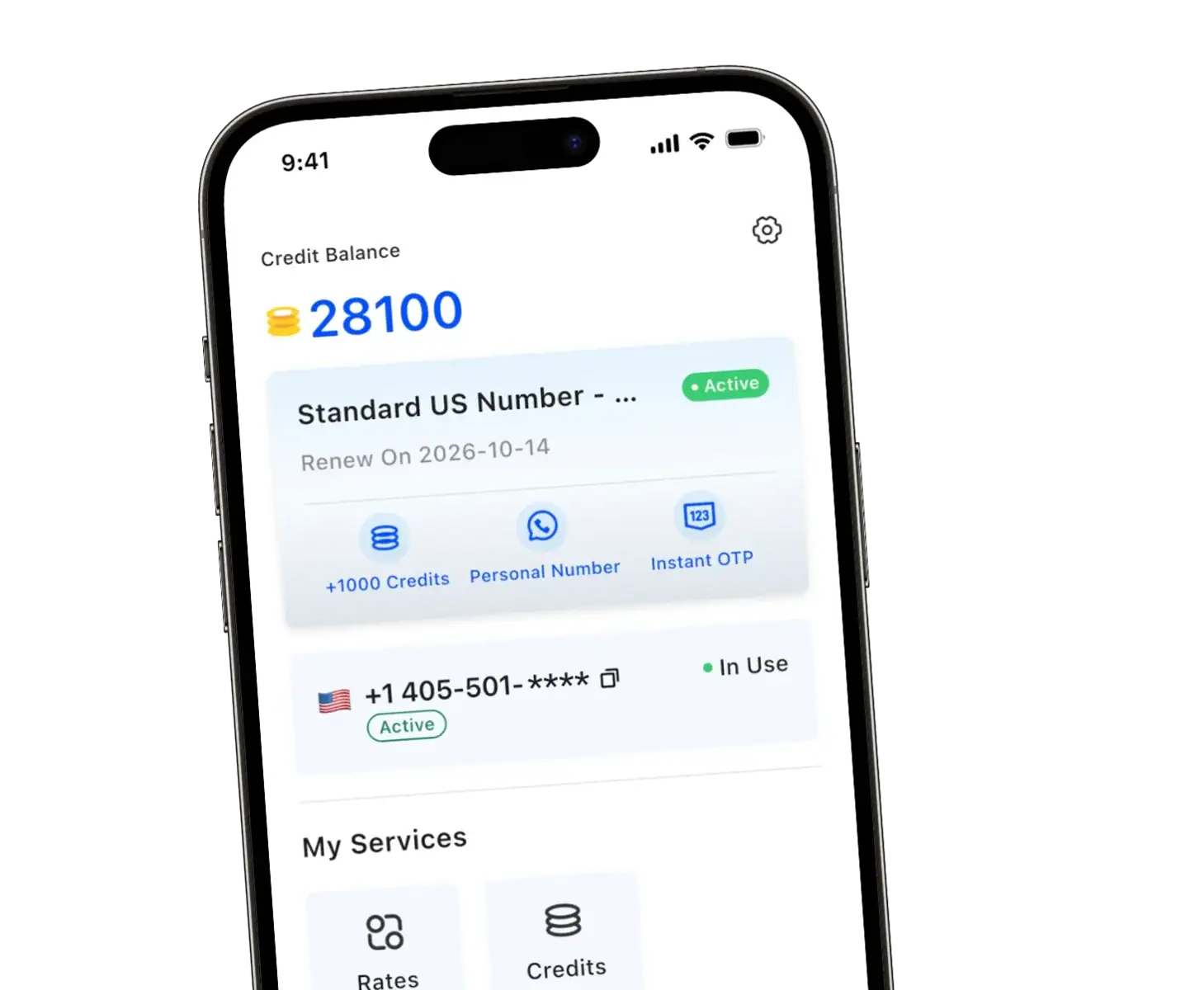
We built TrueNumber to help you separate public calls, texts, and supported verification from your primary line. You can use multiple U.S. numbers for different parts of your life without adding another physical SIM.
Download TrueNumber to set up a second line.