Phone verification fails for two very different reasons: sometimes the code doesn’t arrive, and sometimes the number is rejected before anything is sent. The second case is a number-type problem, and it’s the one people diagnose last — because nothing on screen tells you the platform screened your number out.
Understanding how platforms classify numbers turns verification from trial-and-error into a decision you make once, before you enter anything into a form.
The four checks every platform runs
Behind almost every phone field, the same sequence happens:
Range classification. Numbers are tagged as mobile, VoIP, or fixed-line from carrier registry data. This tag arrives before any SMS is sent, and platforms read it first.
Country and format rules. E.164 format, supported countries, sometimes country matching against your IP.
History and reputation. Has this number (or range) created accounts before? Has it been reported? Free and heavily reused numbers fail here even when their type is fine.
Delivery feasibility. Can an SMS actually terminate on this range? Some VoIP and most fixed-line ranges have no SMS route at all.
A real-carrier number passes all four by default. A VoIP number passes two, partially passes one, and the last depends entirely on the range.
Where each type wins
| Number type | What it is | Good at | Weak at |
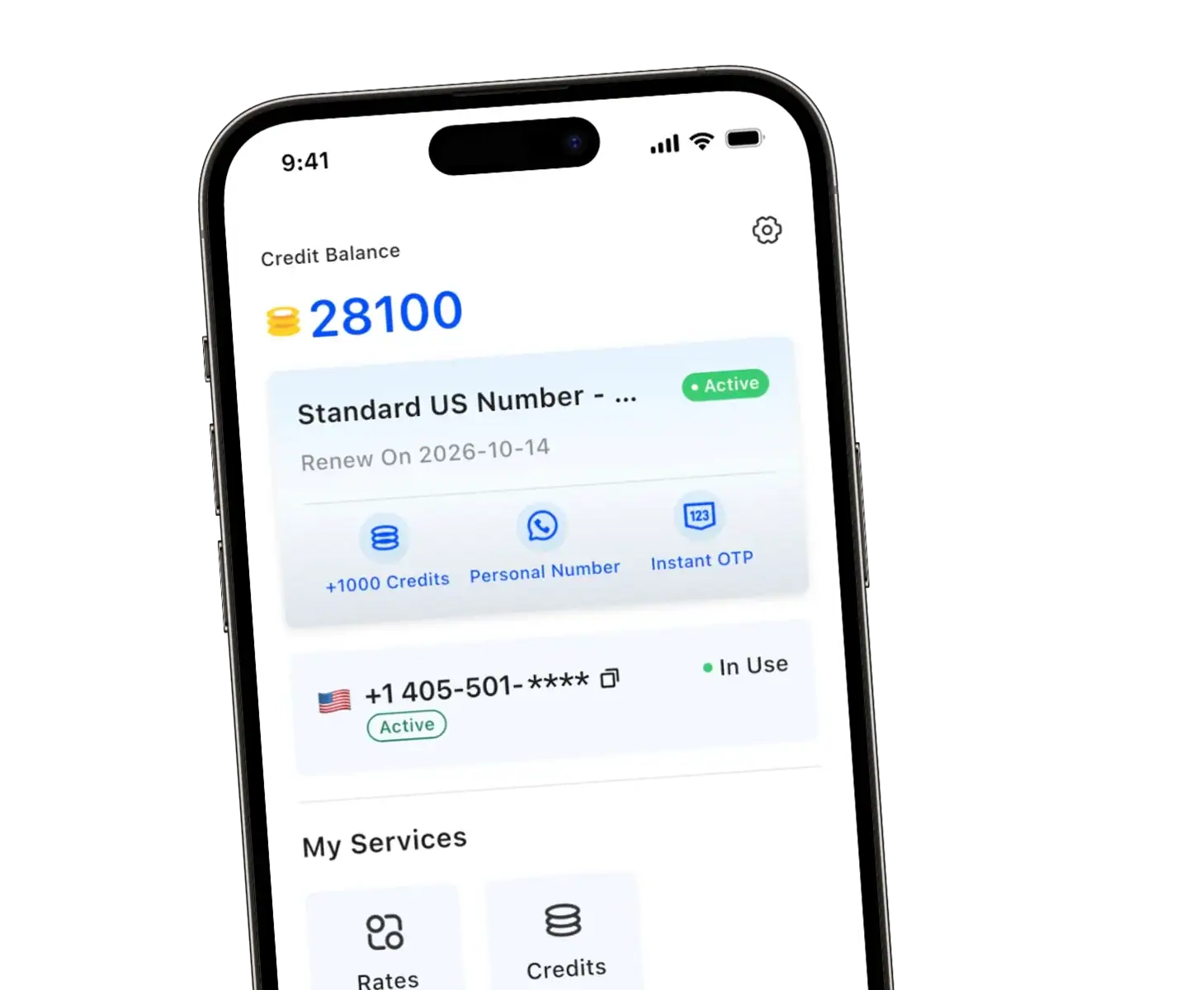
| App-based real number (e.g. TrueNumber) | A real US carrier line in an app | Calls + texts, daily use, mainstream US apps, calls-included verification | Non-US platforms; carrying many numbers cheaply |
| Rented virtual number (e.g. WhatsNumber) | A number provisioned on a hosting range | Cheap, instant, multi-country, fine for lenient platforms and privacy signups | Strict platforms; platforms that reject VoIP ranges |
| Rented real mobile number (e.g. WhatsNumber) | A real SIM-range line rented online | Strict platforms, account recovery months later, WhatsApp-class screening | Cost; usually fewer countries |
| Free public SMS number | A shared web inbox | Nothing worth keeping | Privacy, reliability, history — fails on all four checks |
The pattern worth memorizing: strictness tracks account value. Platforms that guard money, identity, or messaging reputations (banking, payments, WhatsApp, some marketplaces) screen VoIP ranges aggressively. Platforms guarding convenience (trial signups, newsletters, most social apps) accept almost anything SMS-capable.
How to pick, in one pass
Ask four questions in order:
Which country must the number be from? Some services check country of registration. A US-only app line covers US requirements; for UK, Canada or others you need a provider with those countries — WhatsNumber covers all three with virtual and real types.
How strict is the platform? If the account holds money, identity, or message history, start with a real-carrier number. A VoIP rejection doesn’t just fail once — some platforms flag the account on a failed screening, which poisons later attempts with better numbers.
How long must the number live? Verification isn’t the only SMS you’ll receive. Logins from new devices, security checks, and re-verification all go to the same number later. If the account should survive a year, rent for a year rather than juggling renewals — 12-month terms exist precisely for this.
Who else can see its inbox? A public SMS site means your codes are public too — anyone can read them, including whoever wants to take the account you just made. Private access is a requirement, not a feature.
The mistake that costs the most
People optimize for price and end up paying in time: a free or dirt-cheap number fails on a strict platform, the user retries five times (tripping rate limits), concludes “verification is broken”, and abandons an account they wanted. The total cost of one failed signup on a strict platform — an hour of retries plus a flagged device — exceeds a year of renting a proper number.
The second-most-expensive mistake is the opposite: using a premium real number for throwaway signups. Lenient platforms don’t deserve the budget line; match the tier to the platform, not the other way around.
If you’re choosing a provider, compare these
Number type availability (virtual and real), country coverage, rental terms, private inbox access, and how long a number can be held in one continuous term. Price only matters after those check out — and services differ more on term length than on monthly price. If you want to see how rental services in this market actually differ, WhatsNumber’s own comparison of rental services is a useful starting grid.
FAQ
Why was my number rejected before any code was sent?
The platform read its range classification and declined — usually a VoIP or fixed-line range on a strict platform. The fix is a different number type, not more retries.
Are VoIP numbers always rejected?
No. Lenient platforms accept them routinely. The risk concentrates on payments, banking, messaging and identity-heavy services.
Is an app-based second number a real number?
On TrueNumber, yes — real US carrier ranges, which is why they pass screenings that VoIP numbers fail.
What number type should I use for WhatsApp?
A real mobile range, with voice support so the call fallback works. WhatsApp screens VoIP more aggressively than most platforms.
How long should I rent for an account I plan to keep?
Match the term to the account’s expected life. Re-verification goes to the registered number months later; a lapsed rental takes the account with it.