If you’re traveling or living abroad, keeping your number reachable can get expensive fast—especially with roaming fees. International call forwarding lets you redirect calls from your regular number to another number (or an app-based number) so you can answer from anywhere. It’s easy to set up, and it’s often much cheaper than roaming.
What Is International Call Forwarding?
International call forwarding is exactly what it sounds like: redirecting calls from your home phone number to another number in a different country. When someone dials your regular number, the call automatically routes to wherever you are in the world—whether that’s a local SIM card in Thailand, a hotel room in Paris, or even a virtual number on your smartphone.
Your callers don’t need to know you’re abroad. They dial your familiar number, and you answer—no complicated international codes required on their end.
How Does It Actually Work?
Think of international call forwarding like setting up mail forwarding at the post office. Instead of letters going to your old address, they’re redirected to your new one. With call forwarding, incoming calls hit your original number, then get instantly rerouted to your international destination number through your carrier’s network or a virtual phone service.
There are several types of call forwarding you can use:
-
Unconditional forwarding – All calls forward automatically
-
Conditional forwarding – Calls only forward when you’re busy or don’t answer
-
Selective forwarding – Only specific numbers get forwarded
Why You Need International Call Forwarding
For Travelers & Expats
International call forwarding helps you avoid those wallet-draining roaming fees while keeping your original number active. Your family can still reach you at your regular number, your bank can call to verify transactions, and you’ll receive those crucial two-factor authentication codes without missing a beat.
For Businesses & Remote Workers
For Digital Nomads
How to Set Up International Call Forwarding
Option 1: Forward Your Existing Number
Step 1: Check with Your Carrier
Contact your mobile carrier to verify they support international call forwarding. Most major U.S. carriers (Verizon, AT&T, T-Mobile, Sprint) offer this service, but capabilities and costs vary widely.
Step 2: Activate Call Forwarding
Here are the magic codes you’ll need:
For Verizon & Sprint (CDMA):
-
Enable: Dial
*72+ your international number + press SEND -
Disable: Dial
*73+ press SEND
-
Enable: Dial
*21+ your international number +#+ press SEND -
Disable: Dial
#21#+ press SEND
Important note: These codes work differently depending on whether you’re on a CDMA or GSM network. If you’re traveling internationally, GSM codes are more reliable worldwide.
Step 3: Get Your International Destination Number
This is the number you’ll forward calls to. Options include:
-
A local SIM card from your destination country (cheapest for long stays)
-
A real second phone number app (most flexible)
-
A VoIP number like Skype (good intermediate option)
Step 4: Test Everything
Before you board that plane, call your number from a friend’s phone to make sure forwarding works properly. Check that voicemail routes correctly and that you can hear the caller clearly.
Option 2: Skip the Hassle with a Real Second Phone Number App
Here’s a secret: traditional call forwarding isn’t your only option. In fact, it’s not even the best option anymore.
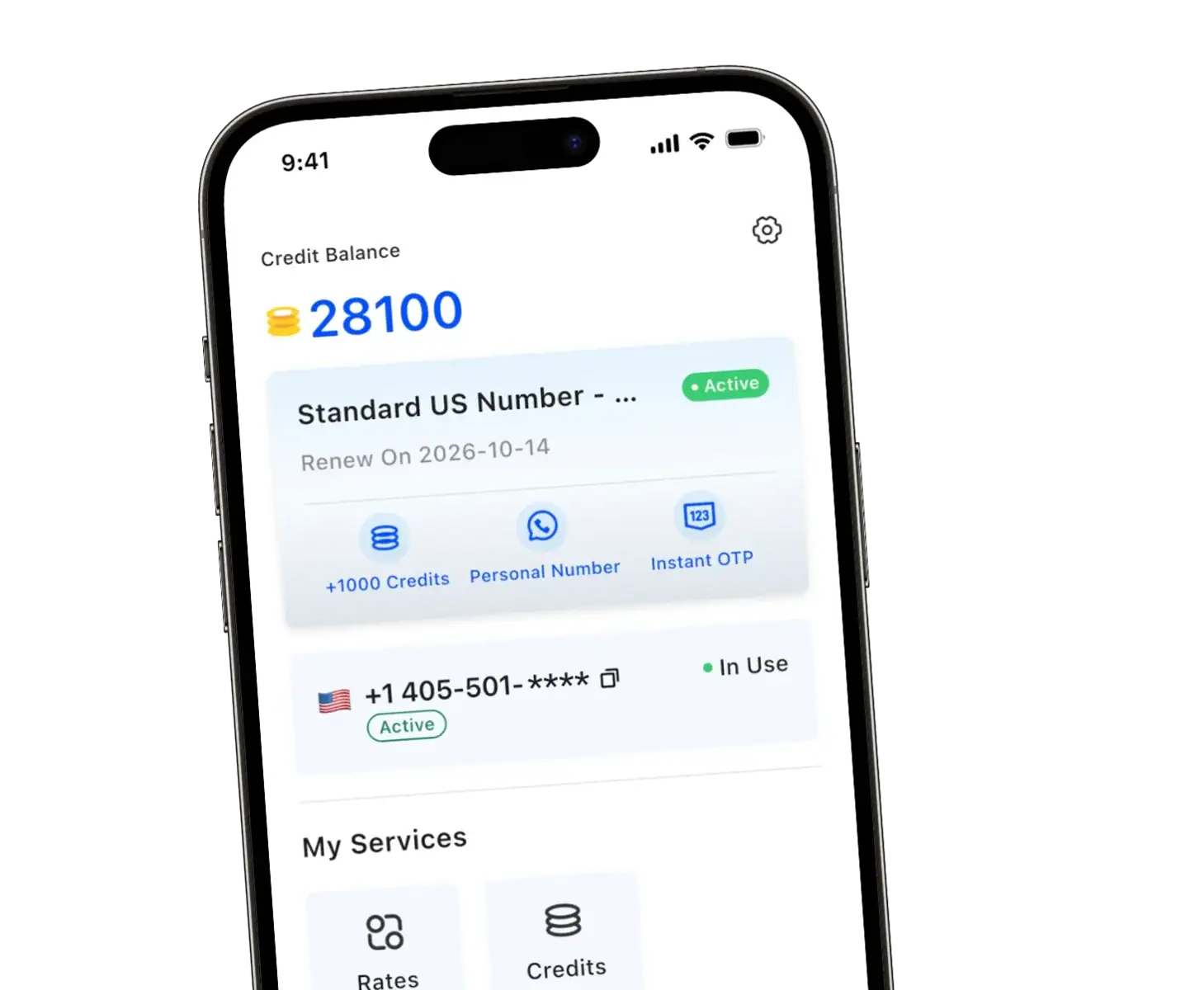
Real second phone number services like TrueNumber offer a smarter, more flexible solution. Instead of dealing with carrier codes and international routing complications, you get a real phone number that lives entirely in an app on your smartphone. Unlike typical virtual numbers that often get rejected by verification systems, TrueNumber gives you an authentic mobile number that works exactly like your primary number. No SIM card needed, no activation codes, no headaches.
-
Get set up in literally 60 seconds
-
Choose a local area code
-
Make WiFi calls with HD voice quality
-
Receive calls from anywhere in the world over Wi-Fi or mobile data
-
Send and receive texts (including those crucial verification codes)
-
Keep your personal number completely private
-
Receive verification codes from 50+ apps – Unlike typical virtual numbers, TrueNumber works with WhatsApp, Telegram, TikTok, Instagram, Facebook, PayPal, Amazon, Uber, and more
What Does International Call Forwarding Cost?
Traditional Call Forwarding Costs
Monthly Fees: USD 5-50 depending on your carrier and plan
Per-Minute Rates: This is where it gets tricky. International forwarding rates vary dramatically by destination:
-
Popular destinations (UK, Canada, Mexico): USD 0.05-0.15 per minute
-
Other countries: USD 0.20-0.50+ per minute
-
Some landline-to-landline calls may be free in specific countries
-
Activation fees (USD 0-50)
-
If your phone is on while abroad, you might pay BOTH forwarding charges AND roaming charges
-
Toll-free numbers often don’t work internationally or incur extra fees
-
Voicemail access from abroad can cost USD 1-2 per call
Second Phone Number Costs
Services like TrueNumber charge a transparent flat monthly subscription with no hidden costs, activation fees, or maintenance charges. Since calls route over the internet rather than traditional phone networks, you avoid those per-minute international charges for calls to USA, Canada, and Mexico. You just need a Wi-Fi connection or mobile data.
Quick Cost Comparison:
If you’re traveling for 2 weeks and expect 30 minutes of calls:
-
Traditional forwarding: USD 15-30 in forwarding fees + your regular plan
-
Real second number (TrueNumber): Flat monthly subscription + any data costs (usually negligible)
Smart Tips for International Call Forwarding
-
Always Test Before You Travel
-
Turn Your Phone Off or Use Airplane Mode
-
Set Up Voicemail-to-Email
-
Inform Important Contacts
-
Know How to Disable Remotely
-
Verizon: +1-908-559-4899
-
AT&T: +1-800-331-0500
-
T-Mobile: +1-800-937-8997
-
Consider Time Zones
Making the Right Choice for Your Situation
Choose Traditional Call Forwarding If:
-
You’re traveling for just 1-2 weeks
-
You need to keep your exact same phone number
-
You have unlimited international forwarding in your plan
-
You’re comfortable with carrier codes and setup
Choose a Real Second Number (in TrueNumber) If:
-
You travel frequently or for extended periods
-
You want a second number for privacy or business
-
You need both calls and texts to work seamlessly
-
You want the simplest possible setup
-
You need to receive verification codes while abroad for app registrations
-
You’re tired of expensive international charges
-
You want a real number that works with all services
-
You need to register for social media, dating apps, or AI tools without exposing your personal number
Stay Connected, Stay Smart
International call forwarding doesn’t have to be complicated or expensive. Whether you choose traditional carrier-based forwarding or embrace the flexibility of a real second phone number, the key is planning ahead and understanding your options.
For most travelers, digital nomads, and internationally-minded folks in 2026, real second phone number services offer the sweet spot of convenience, cost, and capability. No more wrestling with activation codes or worrying about per-minute charges. Just pure, simple connectivity wherever life takes you.
Ready to simplify your international calling? Get your real second phone number with TrueNumber in just 60 seconds. No SIM card required, works globally on iOS and Android, and perfect for travel, business, and privacy. With the ability to receive verification codes from 50+ popular apps and services, you’ll never worry about being locked out of your accounts while abroad. Download the app today and stay connected on your terms.
Frequently Asked Questions (FAQs)
Q1: Does international call forwarding work with toll-free numbers?
Q2: Will my callers know their call is being forwarded internationally?
Q3: Can I forward to multiple numbers simultaneously?
Q4: What happens if my international phone is off or out of service?
Q5: Do I need an unlocked phone for international call forwarding?
Q6: Can I forward calls from a landline to an international mobile?
*72 code on the landline phone, but be warned: landline providers often charge steep per-minute rates for international forwarding.