Area codes are something most of us use every single day without giving them a second thought — but there’s actually a fascinating story behind those three little digits.
Now, we’ll explain exactly what an area code is, how it works, where it came from, and why it still matters in 2026. Whether you’re a curious individual or a business owner looking to establish a local presence, this guide has you covered.
The Simple Definition of an Area Code
An area code is the first three digits of a ten-digit phone number that identifies a specific geographic region within a country. In the United States and Canada, every phone number follows this format:
[Area Code] + [3-Digit Prefix] + [4-Digit Line Number]
For example, in the number (404) 555-1234, the area code is 404 — which corresponds to Atlanta, Georgia. The area code is also technically referred to as a Numbering Plan Area (NPA), though most people just call it the area code.
Simple enough, right? Now let’s dig into where this system came from.
A Brief History of Area Codes
Before area codes existed, phone calls were routed manually by operators — a slow and inefficient process that simply couldn’t keep up with a rapidly growing country. Something had to change.
In 1947, AT&T and the Bell System introduced the North American Numbering Plan (NANP) — a revolutionary system designed to automate call routing across the United States and Canada. The plan divided North America into geographic zones, each assigned a unique three-digit code.
The very first area code ever used was 201, assigned to New Jersey in 1951 when direct long-distance dialing was first tested. Interestingly, early area codes weren’t assigned randomly. High-population cities got codes with fewer dial pulses on rotary phones — meaning shorter dialing time. That’s why New York City got 212 and Los Angeles got 213. Rural areas with fewer callers got higher-pulse codes that took longer to dial.
Fast forward to today, and the NANP has grown from a few dozen original codes to over 800 active area codes across the US alone — a testament to just how much our communication needs have exploded.
How Does an Area Code Work?
Think of an area code like a postal ZIP code, but for phone calls. When you dial a number, the phone network reads the area code first to figure out which region the call is headed to, then uses the three-digit prefix to narrow it down further to a specific exchange, and finally the last four digits to reach the exact line.
Here’s the full breakdown of a phone number:
| Part | Digits | What It Does |
| Area Code | First 3 | Identifies the geographic region |
| Prefix | Middle 3 | Narrows to a local exchange |
| Line Number | Last 4 | Identifies the specific phone line |
A few important rules govern how area codes are structured. The first digit of an area code can never be 0 or 1, and certain combinations like X11 (think 911 and 411) are reserved for special services. Also worth noting: the +1 you see before US numbers is the country code, not the area code. It simply tells the international phone network you’re calling the United States or Canada.
Until relatively recently, many areas used 7-digit dialing for local calls — meaning you didn’t need to dial the area code at all. Today, 10-digit dialing (area code + 7-digit number) is the standard across most of the US, largely because overlapping area codes made the old system unworkable.
Who Assigns and Manages Area Codes?
Area codes don’t just appear out of thin air — there’s a whole administrative process behind them. The North American Numbering Plan Administrator (NANPA), currently managed by Somos, Inc., is the organization responsible for overseeing the entire system.
NANPA monitors how quickly phone numbers are being used up in each region, recommends when new area codes are needed, and coordinates their rollout. However, NANPA doesn’t act alone. State Public Service Commissions (PSCs) and the Federal Communications Commission (FCC) also play a role in approving new area codes and deciding how relief plans are implemented. NANPA also maintains an up-to-date nationwide area code map that’s available to the public — handy if you ever need to look up where a number is from.
What Happens When an Area Code Runs Out of Numbers?
Geographic Split
A geographic split draws a line through the existing area code’s territory. One side keeps the old code, while the other gets a brand-new one. The upside is that it preserves a clear geographic identity — but the downside is significant: businesses and residents in the new zone have to change their phone numbers, which means updating business cards, websites, signage, and more. Costly and inconvenient.
Overlay Plan
Boundary Elimination
A newer variation of the overlay, boundary elimination removes the lines between neighboring area codes, merging them into one shared zone. A real-world example is the Phoenix, Arizona area, where codes 480, 602, and 623 now serve overlapping regions.
| Method | Change Your Number? | 10-Digit Dialing Required? | Best For |
| Geographic Split | Yes (new zone) | No | Areas wanting clear geographic boundaries |
| Overlay | No | Yes | Areas prioritizing number stability |
| Boundary Elimination | No | Yes | Neighboring regions with growing demand |
Well-Known U.S. Area Codes at a Glance
Here are some of the most recognized area codes across the country:
| Area Code | Region |
| 212 | New York City (Manhattan) |
| 310 | Los Angeles, CA |
| 312 | Chicago, IL |
| 404 | Atlanta, GA |
| 305 | Miami, FL |
| 415 | San Francisco, CA |
| 713 | Houston, TX |
| 617 | Boston, MA |
Why Area Codes Still Matter Today
You might think area codes are a relic of the landline era. In reality, they’re more relevant than ever — for a few key reasons.
For businesses, the local area code you display makes a real difference. Studies consistently show that people are far more likely to answer a call from a recognizable local number than from an unknown or out-of-state code. If you’re a business targeting customers in Chicago, having a 312 number builds instant trust and familiarity — even if your team is working remotely from across the country.
For billing, area codes define rate center boundaries — the geographic zones that determine whether a call counts as local or long-distance. While most modern plans offer unlimited calling, this still matters on certain carrier plans and for businesses managing communication costs.
For culture, area codes have taken on a life of their own. They appear on bumper stickers, in song lyrics, and as genuine badges of civic pride. If you’ve ever heard a rapper shout out “the 305” (Miami) or “the 404” (Atlanta), you’ve seen area codes functioning as cultural identity markers. People sometimes keep their old area code for years after moving, simply because it connects them to home.
Want a US Phone Number With a Specific Area Code? Download TrueNumber
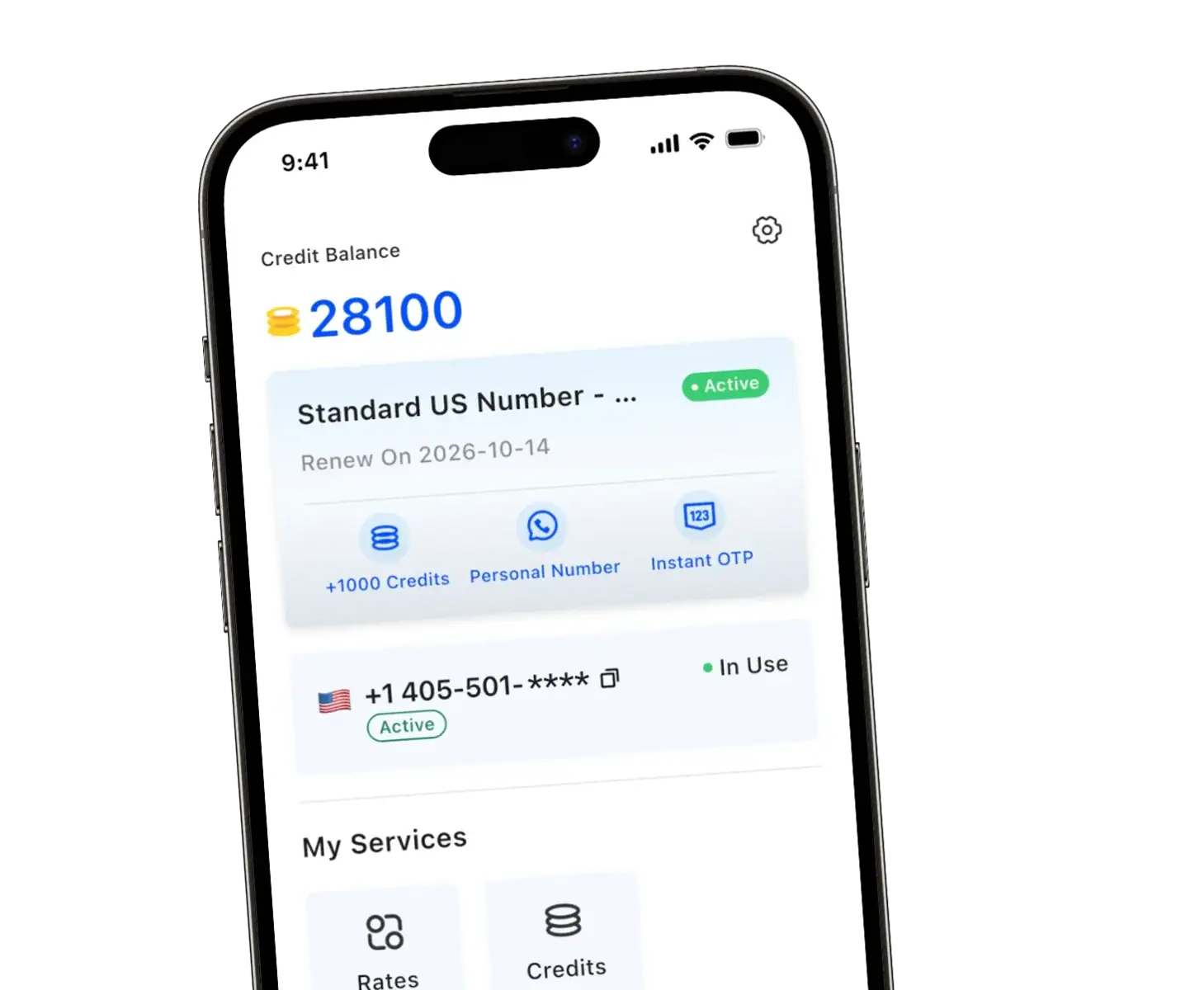
If you need a real US phone number with the area code of your choice, TrueNumber makes it instant and effortless. Simply download the app, pick your preferred area code from major US cities, and you’re ready to call, text, and receive verification codes — all in under 60 seconds.
No SIM card. No contracts. No complicated setup.
TrueNumber gives you a fully functional second US number that works just like a real mobile line — you can make and receive calls, send and receive texts, and even get OTP verification codes from WhatsApp, TikTok, Instagram, and 50+ apps. Your contacts only ever see your TrueNumber, never your personal number.
It’s built for anyone who needs a local US presence without the hassle:
-
Travelers & expats who want to keep a US number while abroad
-
Freelancers & businesses who want a local number in a specific market
-
Privacy-focused users who don’t want to share their personal number
-
App & platform verification without exposing your real identity