Search “receive SMS online free” and you’ll find dozens of sites showing live public inboxes — pick a number, request your code, watch it appear in a browser tab. For a throwaway newsletter signup, it can even work. For anything with an account you’ll return to, the model has three structural failures, and knowing them saves you the hour you’d otherwise lose to them.
Failure 1: the inbox is everyone’s
The defining feature of a free SMS site — a public inbox anyone can open — is also its fatal flaw. Whatever account you verify on that number is verifiable by the next visitor too. They don’t need to hack anything: they pick the same number, open the same inbox, request a password reset on “your” service, and read the code in the same public tab.
This isn’t a risk in some edge case; it’s the product working as designed. Every message is visible to every visitor, permanently, with no authentication anywhere.
Failure 2: the number is burned before you find it
Platforms score numbers by history. A free site’s number has been used for hundreds or thousands of registrations — including spam farms, which hit these sites constantly precisely because the numbers are free. By the time you arrive, the number’s reputation on major platforms is already spent: codes get silently suppressed, screenings reject the range, and the site’s owners rotate numbers so fast that any specific one is a lottery.
The mechanics compound: blocked short-code routes, VoIP-range classification, and abuse history all point the same direction. When a free number works at all, it’s usually on the most lenient platforms — the ones where the stakes are lowest anyway.
Failure 3: the account doesn’t survive contact with time
Free numbers are ephemeral. The site’s owners recycle ranges weekly. So the account you verified in January belongs, by March, to a number that has been reassigned to someone else — or no longer exists. Any password reset, re-verification or security check sends a code to a number you no longer control, and the account is unrecoverable by design.
The actual cost math
The free option’s price isn’t zero; it’s paid in:
Time — cycling through numbers and sites hoping one passes,
Failure risk — strict platforms (payments, messaging apps, some marketplaces) reject these ranges on sight, and a failed screening can flag the account itself,
Security — every code sent to a public inbox is a password-reset vector against the account attached to it,
Loss — any account worth keeping is attached to a number that will vanish.
One hour of failed signups costs more than a month of a proper number — and unlike the free option, the paid option leaves you with something: a number that’s yours, on an inbox only you can read.
What actually works, by use case
| Need | What to use |
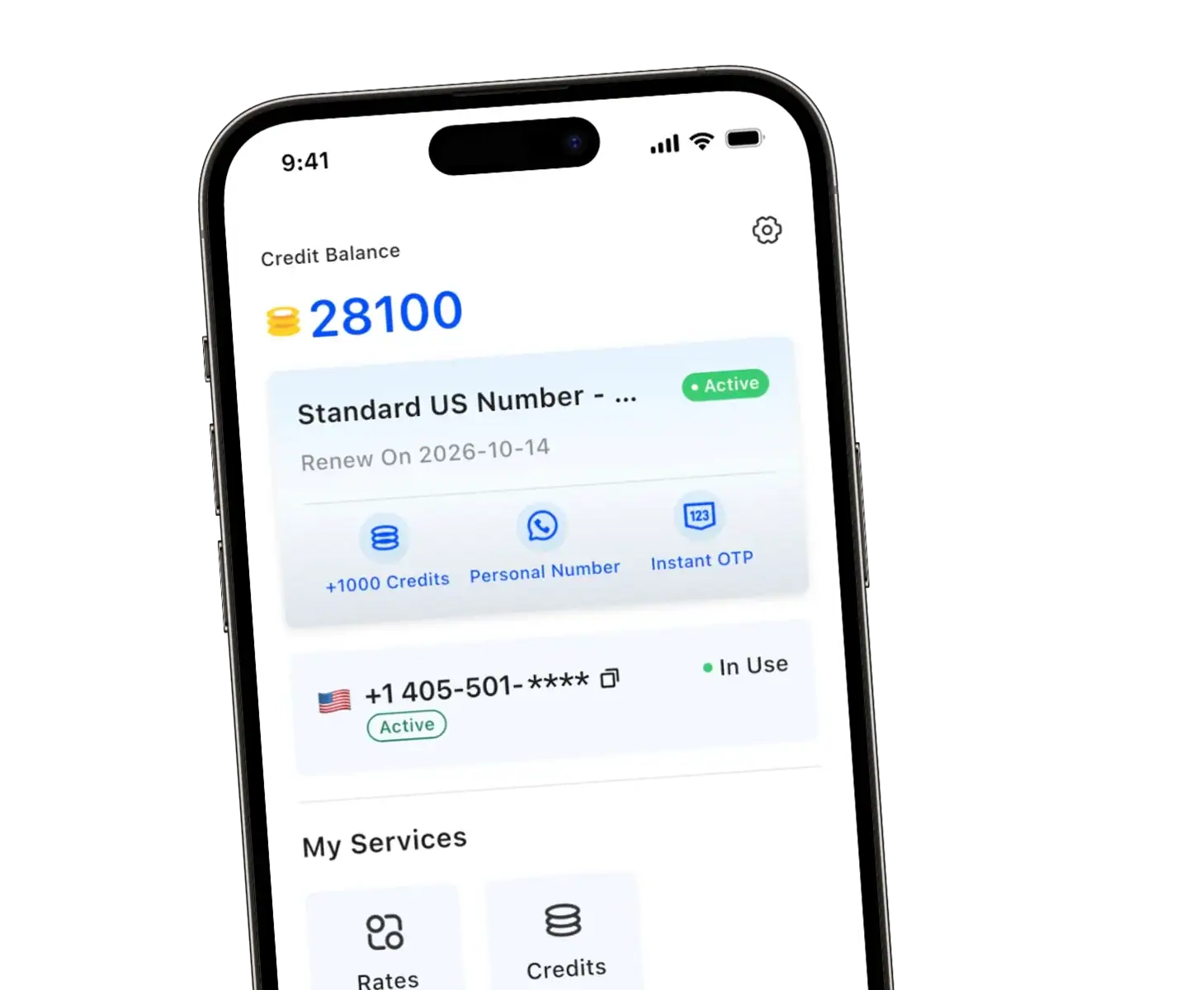
| A daily second line in the US: calls, texts, mainstream apps | App-based real number (TrueNumber) |
| Verifications on strict platforms, any country | Rented real mobile number |
| Cheap, private one-off signups in US/CA/UK | Rented virtual number |
| An account you’ll keep for months | Long-term rental on a private range |
The common thread in the last three rows is privacy + a stable number pool — the two things free sites structurally cannot offer. Rental services like WhatsNumber exist for exactly this layer: dedicated numbers with private inboxes, virtual or real-carrier, held from a month up to twelve months. It’s the tool for when the number itself matters, not just the code it receives once.
If you want to go deeper on how number type determines what a platform will accept, we’ve covered how to choose between VoIP and real-carrier numbers separately.
A note on the middle ground
Paid-per-code marketplaces (one activation, one code, number dies) sit between free sites and rentals. They’re cheaper than a rental for pure one-off volume, but they inherit two of the three free-site failures: shared abuse history and zero continuity. Fine for fifty throwaway signups; wrong for anything you’ll log into twice.
FAQ
Are free SMS websites safe for verification?
For anything with an account attached — no. The public inbox makes every code visible to everyone, which turns your verification into someone else’s password-reset.
Why did the free number work yesterday but not today?
The site rotated its number pool, or the number’s reputation finally tipped over on the platform you’re targeting. Either way there’s nothing to fix on your side.
Can I keep an account made on a free number?
Only until the number is recycled or someone else claims it. Password resets will go to a number you don’t control.
What’s the cheapest option that’s actually private?
A rented virtual number with a private inbox — a few dollars a month, and unlike a free site, the inbox is yours alone.
When is a free number acceptable?
When the signup is truly disposable: no account value, no recovery needs, no privacy expectation — a mailing list you’ll never open, a trial you’ll never return to.