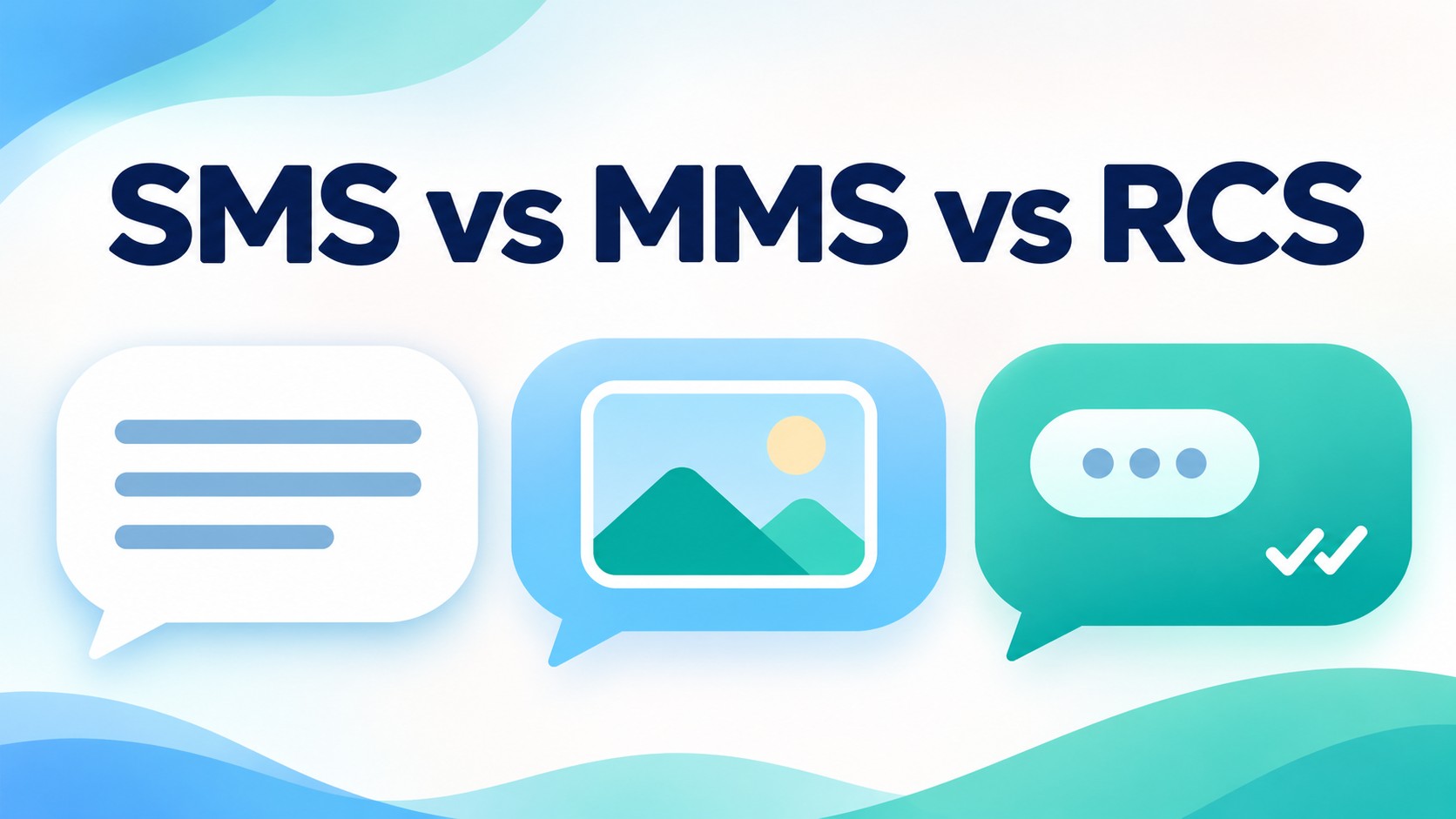
SMS sends plain text, MMS adds media, and RCS adds richer chat features when both sides support it. The message type depends on the sending service as well as the phones involved. If you use a second-number app, check its actual capabilities before assuming it offers all three.
SMS, MMS, and RCS at a Glance
| Type | What it sends | What it needs | Typical experience |
| SMS | Plain text and links | An SMS-capable phone number and service | Basic messages without native read receipts |
| MMS | Texts with photos, videos, or other media | MMS support from the sending service and receiving device | Picture messaging, often with media size limits |
| RCS | Texts, richer media, and supported chat features | Compatible devices, RCS service, settings, and data connection | Read receipts, typing indicators, and improved media sharing when available |
The three labels describe ways to send a message, not three grades of phone number. An RCS-capable phone can still receive an SMS. A number’s provider determines which formats that number can send.
SMS and MMS are not end-to-end encrypted. RCS may be, but only when the particular conversation and providers support it. Google Messages explains how to check the channel and encryption status rather than assuming a read receipt means your message is private.
How Does Your Phone Choose SMS, MMS, or RCS?
In a supported messaging app, RCS works when everyone in the conversation has it available and enabled. It uses Wi-Fi or mobile data. If that path is unavailable, your app and service may send the message as SMS or MMS instead.
- Plain text: The message can go by SMS, or by RCS if the conversation supports it.
- A photo or video: It needs a media-capable route such as MMS or RCS; ordinary SMS cannot carry the file itself.
- A group conversation: Participants’ devices and settings affect whether the group uses richer chat or traditional messaging.
On iPhone, a green bubble can represent RCS, SMS, or MMS, so color alone does not identify the format. In Google Messages, the compose field may say “RCS message” or “Text message”; the latter uses SMS or MMS through your carrier.
Check the sending app too. A conversation inside a second-number app follows that app’s supported messaging service. Installing it on an RCS-capable phone does not automatically give its second number RCS.
Why Did RCS Fall Back to SMS or MMS?
Fallback usually means RCS was not available for that conversation at that moment. It is not, by itself, evidence that the recipient blocked you or that your number has stopped working.
- One participant may not have RCS enabled or supported by their device or service.
- Wi-Fi or mobile data may be unavailable while the message is being sent.
- RCS activation may still be pending for the number or carrier.
- A media or group message may use MMS if RCS cannot be used and MMS is supported.
Start with the conversation label and the RCS status in your messaging app. Google Messages also lets you control whether an unavailable RCS message is automatically resent as SMS or MMS. If the message still fails, test a short plain-text SMS separately.
What Changes With a Second Number App?
Two numbers on one phone can have different messaging capabilities. The provider of each number matters more than the phone model you hold.
| Setup | Where you send | What to verify |
| Carrier SIM or eSIM | Your phone’s native messaging app | Carrier SMS, MMS, and RCS availability |
| Second number in an app | The second-number app | The app provider’s stated messaging formats |
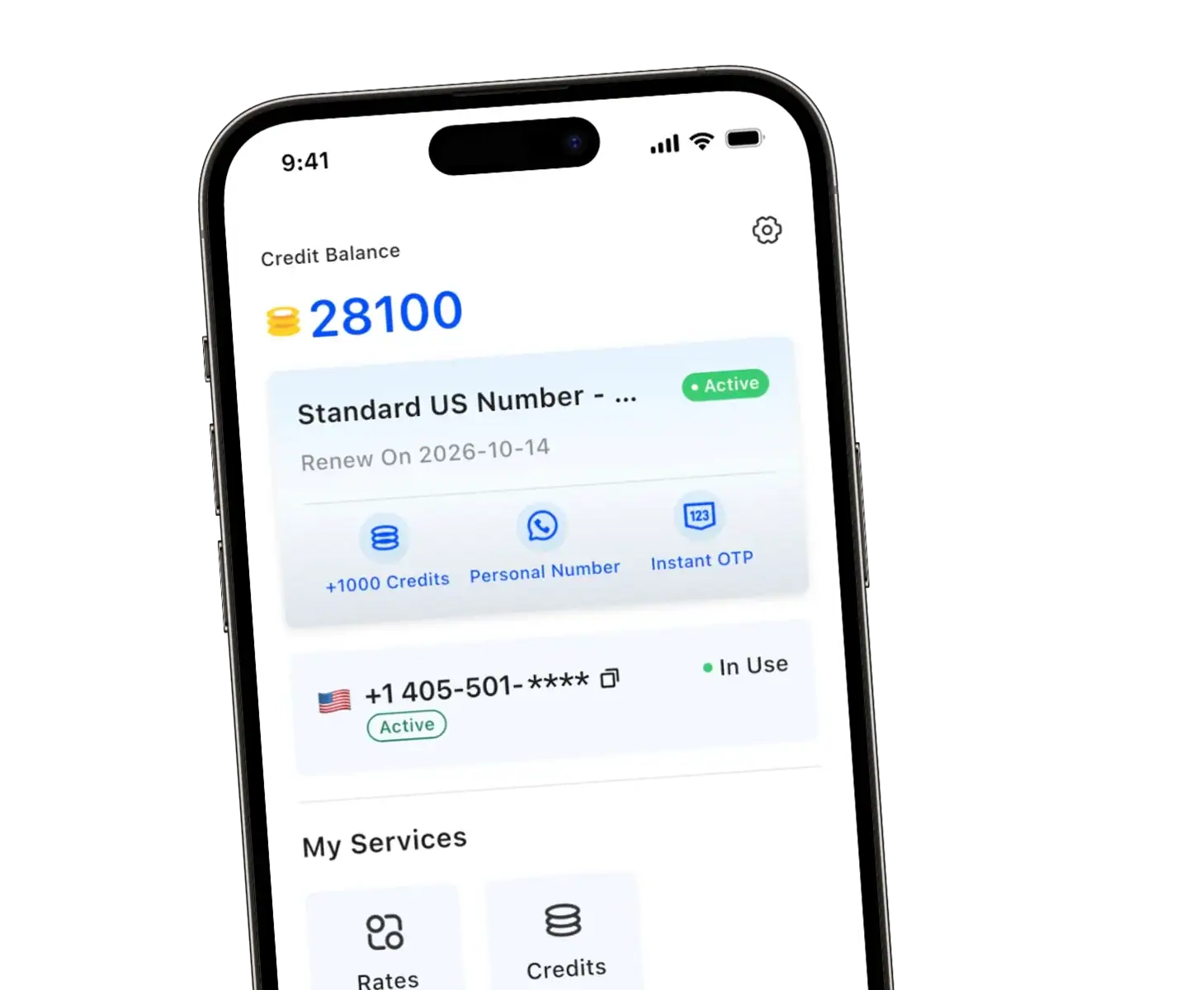
TrueNumber supports SMS, but not MMS or RCS. Our homepage describes a second U.S. number for calls, SMS, and verification without another SIM. Sending from that number gives you an SMS conversation, even if the recipient’s own phone supports RCS.
This makes TrueNumber useful when you need a separate number for short client updates, marketplace replies, sign-ups, and other text-first conversations. You can keep your personal line out of those exchanges while managing the second number from the same phone.
- Need to send a photo as a picture message? Use a service that supports MMS or RCS; TrueNumber cannot send those formats.
- Need read receipts or typing indicators? Use an RCS-capable service with a compatible recipient; SMS through TrueNumber does not add those features.
- Need a separate number for ordinary texts? TrueNumber’s documented SMS function fits that task without another SIM.
If you are comparing a carrier line with an app-based number, our guide to getting a second number on iPhone explains the setup choices.
Which Message Type Should You Use?
- Appointment update or brief reply: SMS is usually enough. It is the practical choice when the message itself is plain text.
- Photo sent as a phone message: Choose an MMS-capable service, or RCS when both sides support it.
- Conversation with richer feedback: RCS can provide read receipts, typing indicators, and higher-quality media on eligible services.
- Separate public-facing number: Choose TrueNumber for SMS and calls when you want to avoid sharing your primary number.
If a picture is essential to a conversation on TrueNumber, send it through a separate media-sharing channel that both people use. A link in an SMS can point to a file, but it does not turn the SMS into MMS or RCS.
For sensitive information, check the recipient and the actual channel before sending. SMS does not provide end-to-end encryption, and RCS encryption depends on the specific conversation.
FAQs about SMS vs MMS vs RCS
Is RCS the same as MMS?
No. MMS is traditional multimedia messaging for sending media through a supported messaging service. RCS is a richer chat standard that can add media sharing, read receipts, and typing indicators when the participants and services support it.
Does RCS replace SMS?
Not in every conversation. SMS remains a fallback when RCS is unavailable and the sending service supports SMS. Whether fallback happens automatically depends on your app’s settings and service.
Can TrueNumber send MMS or RCS?
No. TrueNumber supports SMS messaging, not MMS or RCS. If you need picture messages or RCS chat features from a second number, choose a service that explicitly supports those formats.
Will an RCS user receive my TrueNumber text?
They can receive an SMS if their number and service accept SMS. Their phone’s RCS capability does not change the format TrueNumber sends. You should not expect RCS read receipts, typing indicators, or rich media in that exchange.
Keep Your SMS Conversations Separate With TrueNumber
We provide a second U.S. number for calls and SMS without another SIM, helping you keep public or work texts separate from your personal line. Explore TrueNumber and get the app, or contact us about a specific SMS use case.